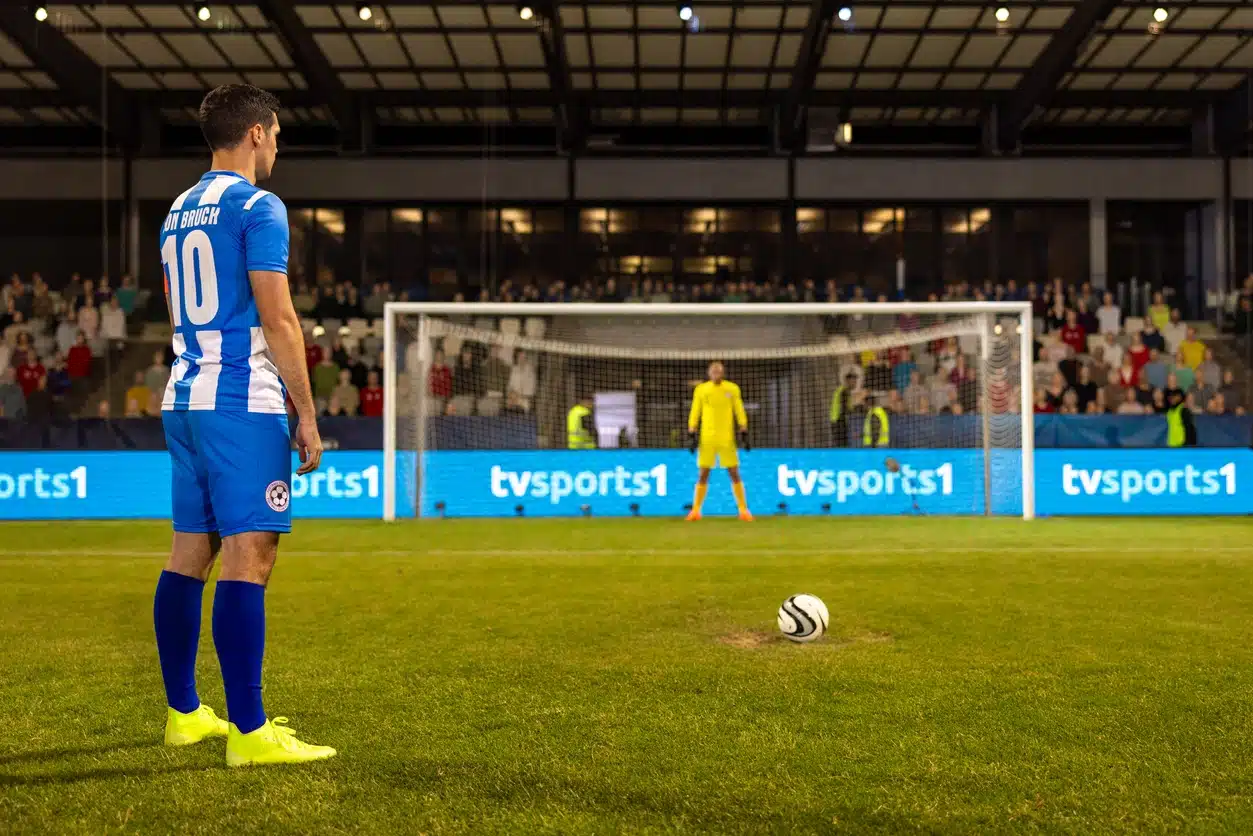
Our Interpretation of Pressure Becomes the Problem
Stepping onto the turf, or in the final moments of competition, pressure is the visceral sensation of the gap between what the moment demands and what you feel you can muster to meet that demand. Notice that the gap is a judgment, not a fact. For example, two basketball players can face the same free throw and read it completely differently, which is why pressure is something you can learn to change.
It is normal to experience pressure in sports and competition. It is NOT the enemy! In fact, sometimes it can compel us to perform better. But, left unchecked, or when it becomes chronic (or debilitating), it can hinder your ability to play.
When Pressure Wins: What Happens
If pressure begins to dominate your mental state, it can look like tightening up, frenetic attempts to avoid losing at all costs, and hesitating on critical decisions that can shape the final outcome. When these factors start to invade your mind, you overthink automatic skills and the plays you’ve spent hours practicing. This often becomes what people colloquially call “choking.” When pressure becomes the forefront of your movements in sport, you can find yourself rushing, struggling to pace your breathing, and experiencing tunnel vision on the outcome.
How To Push Back Against the Pressure by Focusing on What You Can Control
For any athlete, there are a handful of items within your control:
- Your effort
- Your preparation
- Your breathing
- Your attention
Things you will be unable to control:
- Your referees
- The weather
- Your coach
- Injuries
- Your opponents (and their trash talk)
- The scoreboard
If you want to experience sports to their fullest, learn to control the controllables. Be present in the moments where you have control, feel the passion of the team around you, and focus on one play at a time.
How Professionals Handle Pressure
You see it across every sport: The batter tapping his cleats three times before winding up, the track athlete bouncing into the air four times before kneeling into the blocks, the swimmer swinging their arms side to side on the starting block. Before these athletes launch into whatever they are about to do, they have rituals attached to routines that run on autopilot. Whatever you decide to do, it is helpful to add a physical reset like deep breaths or brisk movement. Get yourself grounded before you do whatever your sport asks of you.
Rituals and routines bring us back into the moment when the pressure begins to mount.
Even at the highest level of sport, to have a fulfilling competition experience it is imperative to detach self-worth from the outcome of the game. Instead, the focus should be on the present joy of what you’re doing and treating mistakes as a valuable part of the process. Remember that without mistakes, learning and growth cannot occur.
How You Can Prepare for Pressure Before It Builds
One strategy to help cope with pressure in games is to add real-time consequences to practice. For example, by telling yourself, “If I make five shots, I won’t have to run laps.” You can also raise the stakes by adding an audience: challenge a teammate to see who can juggle the soccer ball longest, or ask them to stop and watch a set of reps. Game day should not be the first time your nervous system experiences pressure. This is why coaches can have you partake in heated scrimmage matches and why practice can sometimes be difficult. It’s meant to build you up for the real thing. However, if you find pressure to be debilitating or if it’s becoming chronic anxious thoughts that exist in and outside the arena, a sport psychology professional can help you work through mental barriers inhibiting you from peak performance. This involves building training regimens to mentally prepare you for pressure and help you reframe how you view pressure as something you’ve already rehearsed and feel prepared for, no matter the occasion.
Frequently Asked Questions
What could be causing my inability to handle pressure in sports?
Our ability to handle pressure is shaped by a combination of factors including how we’re training, how we’ve experienced sports in the past, our genetics, and even outside circumstances and situations that arise in life. Often, it’s because effective tools haven’t been acquired and practiced yet. However, if you work on learning and developing these skills you can derive great meaning and success from competitive play.
Will I ever be able to handle pressure in competition?
Almost certainly. You have the power within yourself to handle pressure and become your best as an athlete. An experienced sport psychology consultant can help you expedite that process by helping you focus on the right things in the right moments and prepare you to handle the biggest moments.
How do I cope with pressure in sports?
You rehearse and you practice. You prep your body for the sensation that pressure induces. You develop routines and rituals that can help ground you when you feel pressure. Most importantly, you reframe your perception of pressure so that it takes a backseat to action in the most critical of moments. And of course, you recognize that the final outcome does not necessarily mean you didn’t handle pressure in the appropriate manner!
Want Pressure to Work For You Instead of Against You?
Routines, resets, and rehearsed pressure are trainable skills. Dr. Mike can help you build them into your practice so game day feels like something you’ve already done.