Tips for Successfully Managing Performance Anxiety in Sports – Cognitive Strategies
Remember, the goal is never to get rid of anxiety altogether. All humans experience anxiety in various situations and, as mentioned in the previous blog post, it can be really useful in the right setting! However, experiencing high levels of anxiety when trying to perform in your sport or activity is only going to be debilitating. Here are some useful concepts to help you deal with performance anxiety in sports and manage the racing thoughts, worries, and fears of performing poorly during competition:
Preparation Is Key to Feeling More Confident and Less Anxious
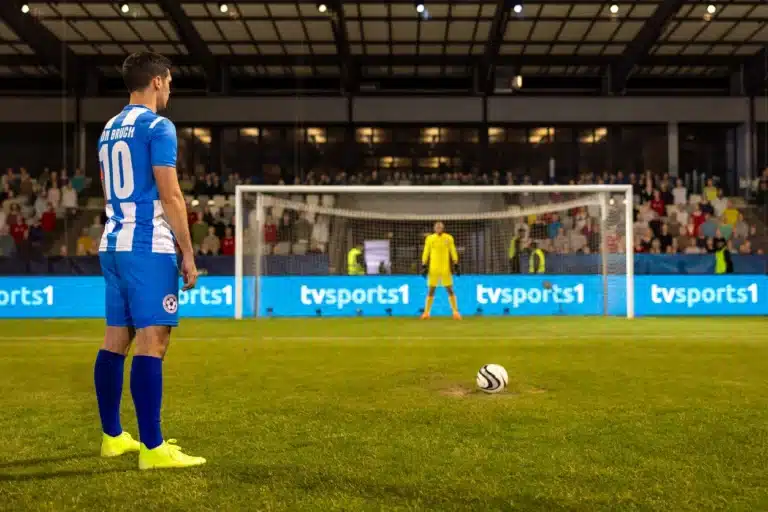
As much as possible, rehearse at practice and/or at home performing under conditions that tend to cause you anxiety during competition. There is simply no substitute for getting repetitions in a similar environment to the real event. For example, a pitcher can practice pitching under pressure due to being down in the count. A basketball player can practice shooting free throws while down in a game and little time left on the clock. A soccer player can practice taking the game-deciding penalty kick in overtime. As much as possible, try to simulate the exact conditions you might experience on game day.
Recognize That Physical Changes in Your Body Indicate You’re Prepared to Perform
We all know the classic symptoms of feeling nervous: butterflies in the stomach, racing heart, heavy breathing, etc. It is important to recognize that experiencing these symptoms is completely normal and an indication that your body is gearing up for the upcoming challenge. It is by no means a sign that you can’t perform well or that anything bad is going to happen!
A great mentor once said to me: “It is not about trying to get rid of the butterflies, it is about simply getting them to fly in formation.”
Learn How to Do Basic Cognitive Restructuring
Cognitive restructuring is the act of identifying and then changing unhelpful and often irrational thought patterns. These tend to cause anxiety and can fill athletes with fear and doubt. Examples of these obstructive thoughts include “I made a mistake and can’t get over it” or “I have to play error-free today to win”. These thoughts are not realistic and will build pressure if held onto. Instead, you can identify these thoughts when they come up and both challenge and replace them with more useful thoughts such as “a mistake or two does not define my performance today” and “errors are inevitable and won’t necessarily mean we lose”.
Tips for Successfully Managing Performance Anxiety in Sports – Physical Strategies
In the cognitive strategies section above, I outlined a few cognitive strategies to help manage performance anxiety in sports. Since anxiety symptoms manifest both in your mind and body, this section will outline three more somatic strategies to help you overcome performance anxiety and perform more consistently under pressure.
Work on a Consistent Pre-Performance Routine
A dependable routine that you practice before competition helps you feel confident and prepared to do your best. Each routine can be unique to the athlete but typically includes a light physical warm-up, a deep breathing technique or two, a quick review of performance goals, some positive self-talk/affirmations, and a short visualization. The key is to hone in on a routine that feels right and helps you feel focused, motivated, and confident for the upcoming competition. Remember, you will perform this routine to help you get ready to go no matter where you play, what the weather is, or who your opponent happens to be.
Utilize Breathing Strategies to Help You Calm Down and Feel More Grounded
Breathing is the foundation for relaxation. When you are feeling anxious, your breathing will be faster, shallower, and less consistent. By doing some quick breathing strategies, you can experience more regular, deep breathing patterns that elicit a relaxation response for your entire body. This in turn slows down heart rate and reduces muscle tension. One example is 3-5-7 paced breathing. Simply breathe in through your nose for 3 seconds, hold for 5 seconds, and exhale for 7 seconds. Do this for about 2 minutes and you will notice relaxation begin to set in. A second example is finger breathing. Trace your fingers going up and breathe in, while exhaling as you trace down your finger. Once you complete one hand move to the second hand and continue this for about 2 minutes.
Try Brief Progressive Muscle Relaxation (PMR) to Help You Loosen Up
PMR is a simple relaxation practice that involves tensing and relaxing muscle groups in your body for short periods of time. PMR typically starts at your head and neck and moves down to your feet and toes. You can alternate between 5 seconds of tension, followed by 10 seconds of relaxation. After moving through your body in this manner, you will feel a full-body sense of calmness and relief. PMR is a great tool to use when you are feeling anxious before a big game!
Frequently Asked Questions
Can you get rid of performance anxiety altogether?
No, and that is never the goal. All humans experience anxiety in various situations, and it can be really useful in the right setting. The aim is to manage the racing thoughts, worries, and fears of performing poorly so high levels of anxiety do not become debilitating during competition.
What is cognitive restructuring?
Cognitive restructuring is the act of identifying and then changing unhelpful and often irrational thought patterns. You can identify obstructive thoughts like "I have to play error-free today to win" when they come up and both challenge and replace them with more useful thoughts such as "errors are inevitable and won't necessarily mean we lose".
What breathing strategies help with performance anxiety?
One example is 3-5-7 paced breathing: breathe in through your nose for 3 seconds, hold for 5 seconds, and exhale for 7 seconds, for about 2 minutes. A second example is finger breathing: trace your fingers going up and breathe in, exhaling as you trace down each finger, continuing for about 2 minutes.
What is progressive muscle relaxation (PMR)?
PMR is a simple relaxation practice that involves tensing and relaxing muscle groups in your body for short periods of time. It typically starts at your head and neck and moves down to your feet and toes, alternating 5 seconds of tension with 10 seconds of relaxation, leaving a full-body sense of calmness and relief.
Want Help Putting These Strategies Into Practice?
Every athlete’s anxiety shows up a little differently. Dr. Mike can help you find the tools that fit you and build them into your training and competition.