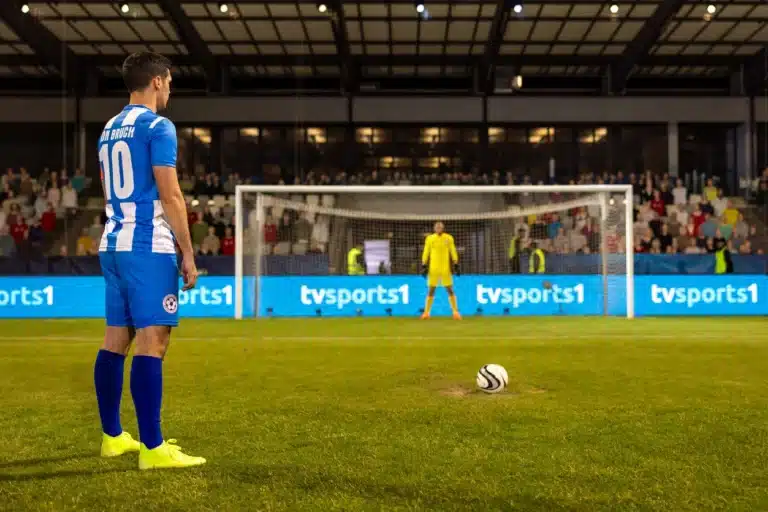
The 12-year-old shortstop who fields everything at Tuesday practice boots the first grounder on Saturday. Most sports parents have watched it happen, and the issue is rarely about skill. Confident kids use the skills they have practiced. Nervous kids play tight and hesitate, and some drift toward sports anxiety and then eventually out of the sport. Stable confidence is built over time, and parents can help do a lot of the building. If you want to know how to help build confidence in young athletes, start with what you say in the car.
What Sports Parents Get Wrong (With the Best Intentions)
I rarely meet a parent trying to hurt their kid’s confidence. I meet plenty doing it anyway. The usual habits: praising the goal instead of the effort, coaching from the bleachers, comparing a kid to a teammate, and breaking down the game before the car door closes. Each one tells the athlete the result is what you care about. In a 32-week study of youth swimmers, kids who felt their parents had created a win-focused climate lost self-esteem, while kids in a mastery-focused climate gained it. These habits come from caring a lot. They are also one of the easiest things in youth sports to fix.
How to Build Confidence in Young Athletes: 4 Things Parents Can Do
1. Praise the Process, Not the Scoreboard
Compare two sentences after a soccer game. “Great game, you scored twice” versus “I saw you keep chasing the ball after that turnover.” The first is about the outcome. The second is about effort and something your kid controlled (and it gives her a positive action that can be repeated). Effort praise turns mistakes into information. Keep it specific and honest. Kids can see through a generic “good job” fast. At the end of the day, the most helpful perspective for long-term success is to focus on effort rather than outcomes.
2. Set One Controllable Goal Before Each Game
A process goal is something your athlete controls no matter the score. For example, to keep talking on defense or work on resetting quicker after a mistake. Before the game, let your kid pick a process goal to focus on. Afterward, ask a single question: did you do the thing? If yes, that is a win, even on a night the team lost by 10. Stack enough of those and a kid starts to trust himself under pressure, because he has repeated proof.
3. Protect the Car Ride Home
Most of the damage I see happens in the car on the way home. My rule for parents is no analysis for 24 hours after the game. A kid’s brain is still in threat mode, and any coaching lands as “you weren’t good enough.” Say “I loved watching you play,” then let them lead. If they want to stare out the window or talk about something completely unrelated, let them!
4. Build a Bank of Evidence
Have your athlete keep a short running list of things they have gotten better at this season. Maybe a first-serve percentage that climbed, or a free throw routine that finally feels automatic. Before a big game, read it together. Past success made visible is the most reliable source of confidence, and it tends to work best for the kid who only remembers the mistakes. Watching personal highlights can also be a great confidence-builder before competition.
When It’s More Than a Dip: Bringing in a Mental Performance Coach
Every athlete loses confidence at times, whether it is going through a slump, a benching, an injury, or that initial jump to a more competitive level. The habits above are usually enough. Some signs point to something bigger:
- Dread before regular practices, which is worse before games
- Wanting to quit a sport they loved just 6 months ago
- Sleep or appetite changes around competition
- Global statements like “I’m just bad” instead of “I had a bad game”
If that sounds familiar, it can be an early sign of burnout in young athletes, or a reason to look into sport-specialized counseling.
Mental skills training for young athletes is structured and skills-based: pre-game routines, self-talk, and what to do with a mistake in real time. As a Colorado-licensed professional counselor with a Ph.D. in sport and performance psychology, my work focuses on both the performance and mental health piece for when a kid needs both. I am based in Centennial and see athletes virtually across all of Colorado.
Frequently Asked Questions
How does confidence affect performance in sport?
Directly. A confident athlete plays loose and decides fast. A kid who doubts themselves hesitates and plays it safe, and ends up looking less skilled than they actually are.
How do I help build my child’s confidence in sports?
Praise effort over results, let them pick one controllable goal per game, keep the car ride home positive, and help them keep a running list of what has improved. Confidence grows from what kids do and what they hear about it afterward.
Why is confidence important in youth sports?
Kids who feel competent keep playing. Kids who stop feeling competent are the ones who quit. Sustained confidence in sport can also translate to other activities in life as well!
Ready to Elevate Your Game?
When you’re ready, use the buttons below to reach out to Elevation Sport & Performance Consulting.