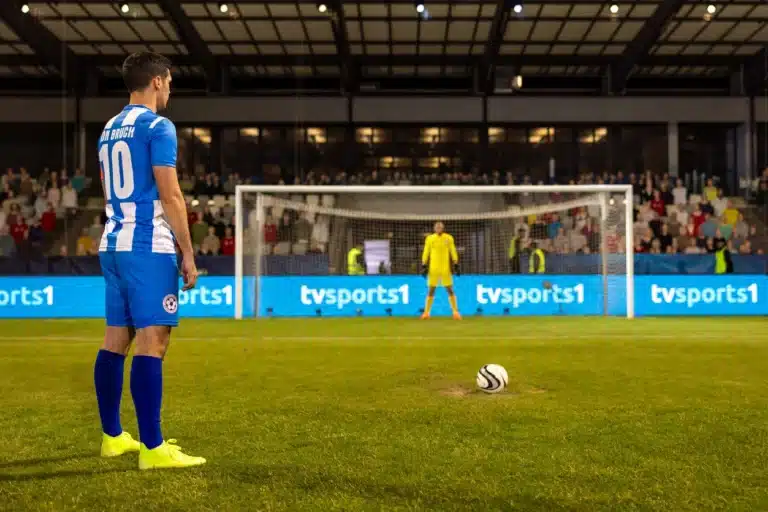
As an athlete, you find yourself immersed in everyday practice and training. But when game day comes, you find yourself unable to focus, your mind fixates on everything except the ball in front of you, and your anxiety starts to climb.
ADHD is known to make it more difficult for an athlete to regulate emotions and let go of mistakes, so normal pre-competition nerves athletes feel get amplified and form a feedback loop of worry. This anxiety then hijacks the focus the athlete with ADHD is fighting to maintain, which further hurts performance and validates the fear.
ADHD Is Quite Common in Athletes and May Be Underreported
ADHD shows up in elite athletes at least as often as it does in everyone else and, there is a chance that in elite athletes this figure could be larger.
Roughly 7–8% of elite athletes have ADHD — at or above general adult population estimates, which range from roughly 3% in global clinical studies to 6% of US adults with a current diagnosis.
There are two primary issues leading to ADHD in athletes being underreported:
- Treatment Modalities: For individuals diagnosed with ADHD, stimulants are often used to help manage symptoms. Stimulants are restricted substances in sport competition and athletes who use them face scrutiny, even at prescribed therapeutic doses.
- Cultural Stigma: Sports culture seldom discusses the mental health struggles that athletes face. And athletes willing to step forward and discuss their experiences competing with ADHD are few and far between.
Putting these together, the 7–8% figure may be underselling the number of athletes competing with ADHD. Newer screening data points the same direction: a 2025 study of 601 endurance and ultra-endurance runners found that 9.7% screened above the clinical cut-off for ADHD — higher than both the general population and earlier elite-athlete estimates. There are athletes competing with undisclosed (or undiagnosed) ADHD. So, if you’re an athlete with ADHD, you’ve got more company than you think.
What Research Tells Us About ADHD and Anxiety in Sport
Anxiety is almost 3x more common in elite athletes than ADHD by itself. A study of 285 elite collegiate athletes found that 22% showed symptoms of generalized anxiety disorder (GAD). ADHD risk, sport injury history, and fear of failure were the predictors of developing GAD in elite-level athletes.
For elite athletes, two of the three risk factors will find themselves within the mind of the same athlete.
How ADHD Amplifies Performance Anxiety
In my work with athletes, three mechanisms come up again and again. The first is emotional regulation: ADHD makes it harder to downshift after a mistake, so a single error carries into the next play instead of staying in the last one. The second is rumination — the replay loop. An athlete with ADHD may struggle to disengage from a missed shot or a botched routine, and that mental replay crowds out the present-moment focus that performance demands. The third is rejection sensitivity: many athletes with ADHD feel criticism — from a coach, a parent, or the bench — more intensely, so the fear of letting people down becomes its own source of anxiety before competition even starts. Put together, these three tendencies turn ordinary pre-game nerves into a self-reinforcing cycle: the harder the athlete fights to focus, the louder the worry gets.
What Acts as a Buffer Against ADHD Feeding Into Performance Anxiety
While ADHD risk, history of sports-related injuries, and fear of failure were predictors of an athlete developing generalized anxiety, research shows that mental toughness and sport satisfaction acted as buffers against experiencing it. These protective factors are trainable and can become part of your routine.
Finding Help and Partnering With Someone Who Can Break the Cycle
ADHD is as common, if not more common, in elite athletes as it is in the general population. ADHD can feed into performance anxiety, which makes competing more difficult. At Elevation Sport & Performance Consulting, I use my clinical experience in mental health, along with my background in applied sport psychology to help you break this negative feedback loop. Let’s get you back to competing at your best. When you’re ready, don’t hesitate to reach out using the buttons below:
Frequently Asked Questions
Can you still be a ‘good’ athlete with ADHD?
Absolutely — ADHD is not a barrier to being an elite athlete, but it is something to manage so it works for you rather than against you. Being diagnosed with ADHD does not necessarily prevent someone from being an elite athlete. In fact, a number of elite, Olympic-level athletes have spoken out about being diagnosed with ADHD and the effects it has had on their playing careers. ADHD does need to be managed effectively so that it is not detrimental to performance. For some athletes, symptoms of ADHD result in impulsivity, inconsistent decision making, struggles with memorizing plays, or emotional regulation. However, the flip side of ADHD can be positive advantages like the ability to hyperfocus, take creative risks, and be comfortable in ever-changing athletic situations.
Are there any famous athletes who are more outspoken about ADHD?
Over the past decade, athletes have become more open about mental health, including ADHD. Swimmer Michael Phelps and gymnast Simone Biles have both spoken publicly about competing at the highest level with the condition — and notably, both have credited their sport with helping them focus and build routines. Competitive figure skater Alysa Liu has also publicly discussed her diagnosis after struggling in high school with missed and unfinished assignments. In all of these cases, the athletes have spoken out to help decrease the stigma associated with a mental health diagnosis and help others who may be diagnosed feel more comfortable with the condition.
Does ADHD show up more frequently in athletes?
While research is limited, studies suggest ADHD shows up in athletes at the same level of non-athletes, if not slightly higher in some groups. This seems to depend largely on sport and level of competition (for example, youth vs. professional). Two main issues that prevent us from making definitive conclusions is the lack of research studies featuring a large number of participants and the underreporting of the diagnosis. Due to the cultural stigma in our society, many people with ADHD are not diagnosed or may choose not to identify with the diagnosis in self-reported studies.
Ready to Break the Cycle?
If ADHD and game-day anxiety are feeding each other, the right tools can interrupt the loop. Dr. Mike combines clinical mental health experience with applied sport psychology to help you compete at your best.